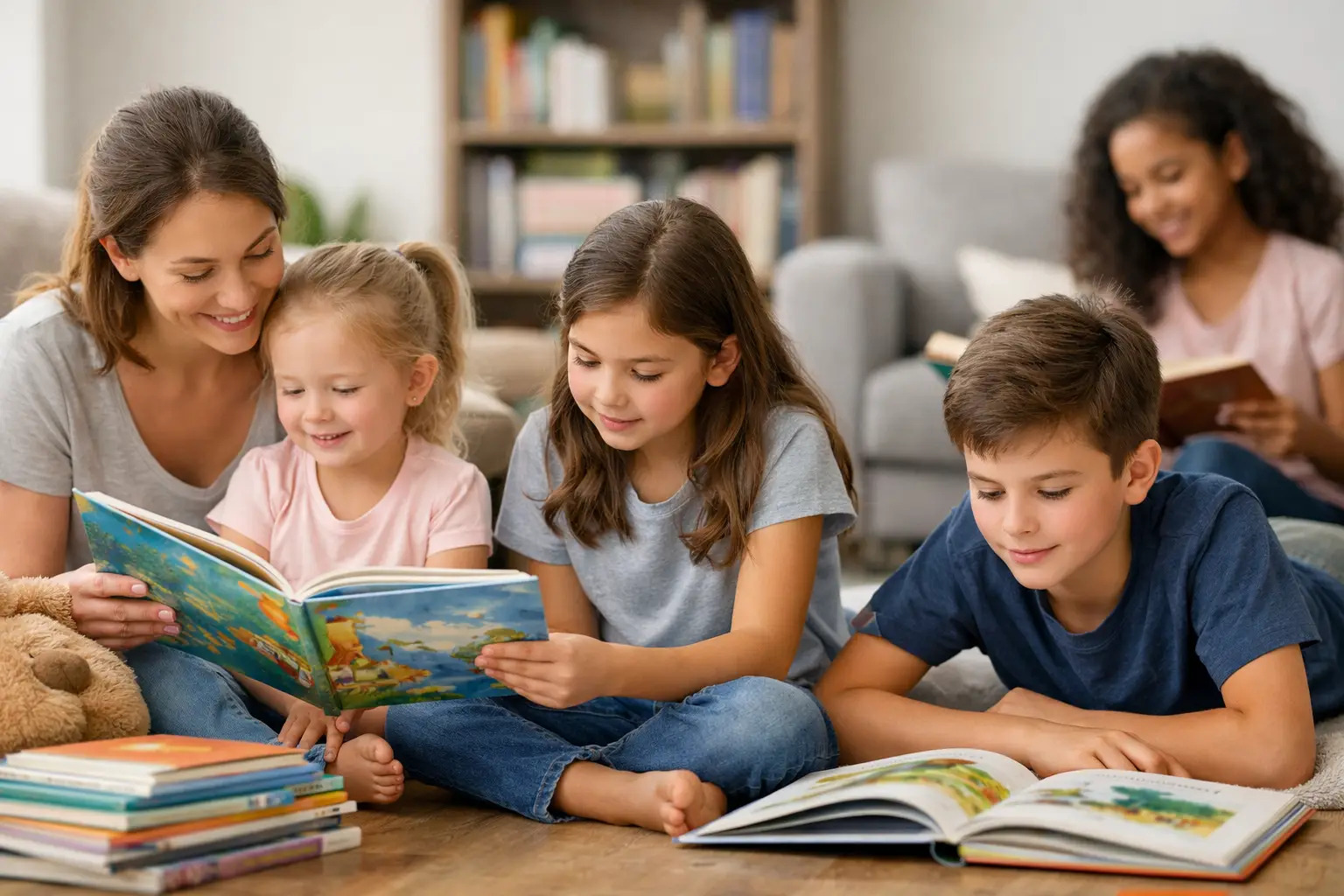
English Picture Books by Age for Every Reader
A baby who chews a board book, a nursery child who repeats a funny phrase, and a Primary 3 pupil following a longer story all need different things from reading time. Choosing English picture books by age helps parents offer the right level of language, illustration and story challenge without turning a pleasurable routine into another piece of homework.
For Hong Kong families, picture books can do more than introduce English words. The right books build listening stamina, natural sentence patterns, phonics awareness, vocabulary and confidence to speak. They also give children a reason to return to English outside school worksheets and assessment tasks. Age is a useful starting point, but a child’s exposure to English, interests and reading maturity should shape the final choice.
English picture books by age: what changes as children grow
Picture books do not stop being useful once a child can decode words. Their role changes. Younger children need repetition, rhythm and clear visual clues; older readers can use illustrated stories to explore richer vocabulary, feelings, humour and more complex plots.
When selecting books, look at three things together: the amount of text on each page, how much the illustration supports meaning, and whether the child can enjoy the story without needing every word explained. A book that is slightly challenging is valuable. A book that requires a translation of nearly every line is unlikely to become a favourite.
Babies and toddlers: birth to age 2
At this stage, books are objects to touch, point at and revisit. Choose sturdy board books with familiar subjects such as faces, animals, food, vehicles, bedtime and daily routines. Simple photographs and bold illustrations work well, especially when there is one clear item or action on each page.
Books with rhymes, repeated sounds, flaps or textures can hold attention, but the language still matters most. Repeated phrases such as “Where is the cat?” or “Goodnight, moon” allow children to anticipate what comes next. This supports early listening and gives them safe opportunities to copy English sounds.
Read very briefly and often. Two minutes after breakfast or before bed is enough. Point, name and pause. If your child says a word in Cantonese, acknowledge it and model the English word naturally rather than turning the moment into a test.
Nursery and kindergarten: ages 3 to 5
Children in this range are ready for stories with a clear beginning, problem and ending. They enjoy predictability, silly surprises, repeated refrains and characters who feel strong emotions. Picture books about sharing, starting school, visiting the doctor, worries, friendship and family routines can also help children use English to talk about their own experiences.
Choose stories with one or two sentences per page, expressive pictures and enough repetition for a child to join in. Traditional tales, cumulative stories and simple rhyming books are particularly useful because children soon recognise patterns in language. A child who can say a repeated line with pleasure is practising pronunciation, memory and sentence rhythm.
This is also a suitable time to introduce letter sounds through books, but avoid treating every story as a phonics lesson. If a book contains a useful sound pattern, notice it casually: “Look, cat, hat and mat sound alike.” Keep the main focus on meaning and enjoyment. Children need to understand that print carries a story before they are asked to read every word independently.
Reception and Primary 1: ages 5 to 7
As formal reading begins, many children benefit from picture books alongside graded readers and phonics materials. Picture books give them richer language than early decodable texts alone can usually provide, while illustrations reduce the pressure of meeting unfamiliar words.
Look for slightly longer narratives, dialogue bubbles, clear page layouts and books that invite prediction. Ask simple questions after a page or two: “What do you think will happen next?” or “Why is she upset?” These questions develop comprehension without making reading time feel like an oral examination.
For children learning English as an additional language, it is sensible to pair a picture book with a graded reader at a comfortable level. The graded reader supports independent decoding; the picture book stretches listening vocabulary and imagination. Both have a place in a balanced home reading routine.
Do not be concerned if your child enjoys listening to a book that is above their independent reading level. Being read to remains one of the best ways to introduce more advanced grammar, descriptive words and story structures.
Primary 2 to Primary 4: ages 7 to 9
At this age, picture books can support the move from learning to read towards reading to learn. Children can follow more developed plots, notice a character’s motivations and discuss the message behind a story. Illustrations remain helpful, particularly for children who are capable readers but still building confidence in English.
Choose books with stronger narratives, humour, informational elements or subjects linked to school learning. Stories about nature, inventions, communities, history and problem-solving can extend vocabulary that later appears in reading comprehension and writing tasks. Wordless or nearly wordless picture books are also worthwhile: children must use visual evidence to tell the story, which develops sequencing and oral composition.
A useful home activity is to ask your child to retell the story in three parts: what happened first, what went wrong, and how the problem was resolved. This quietly reinforces narrative structure for English writing. If they prefer drawing, ask them to create one extra page for the book and explain it aloud.
Primary 5 and above: ages 9 to 11+
Older children may say that picture books are for babies, yet many high-quality titles are written with themes that deserve thoughtful discussion. Sophisticated illustrations, historical settings, biographies, social themes and visual storytelling can engage upper-primary readers, including those who find dense chapter books tiring.
The selection should feel age-respectful. Avoid books that are too childish in subject matter simply because the text is short. Instead, choose visually rich stories with layered themes, factual picture books and graphic narratives. These can help pupils discuss viewpoint, inference, tone and evidence - skills that matter in school comprehension work.
For reluctant readers, a well-chosen illustrated book can be a bridge rather than a compromise. Finishing a complete, meaningful story builds momentum. From there, parents can introduce short novels, series fiction or non-fiction readers related to the child’s interests.
How to choose the right book beyond the age label
Age recommendations are useful, but they are not rules. A confident five-year-old may love a book intended for seven-year-olds when it is read aloud, while a nine-year-old who is new to English may need simpler language with mature subject matter. The best choice sits just beyond what the child can manage alone, with enough support from pictures or an adult reader to keep the experience enjoyable.
Start with interests. A child who loves dinosaurs, football, space, cooking or animals is more likely to persist with unfamiliar vocabulary when the subject already matters to them. Then check the language load. Turn through several pages: are there lengthy paragraphs, many abstract words, or dialogue that moves quickly? There is no need to avoid challenge, but choose one challenge at a time.
Illustrations should add meaning, not merely decorate the page. For younger children, they should clearly show the key nouns and actions. For older readers, they may reveal details that are not stated in the text, encouraging careful observation and inference.
It is also worth considering re-readability. A good picture book can be read many times because children notice new details, repeat favourite lines and gradually understand more English. One-off novelty books have their place, but familiar stories often deliver more lasting language value.
Build a picture-book routine that lasts
Consistency matters more than a large pile of unread books. Keep a small, visible selection near the bed, sofa or dining table, and rotate titles every few weeks. Read the same book repeatedly if your child asks. Repetition is not a sign that they are stuck; it is how language becomes familiar.
During reading, use English as much as possible, supported by gestures, pictures and facial expression. You do not need to explain every word in Cantonese. Choose two or three useful words to revisit naturally, then move on with the story. If a child loses interest, stop at a natural point and return later. Protecting the positive feeling around books is more valuable than completing every page.
For families building a home English library, choose a mix: everyday stories for younger siblings, rhyming and phonics-friendly titles, emotionally reassuring stories, factual picture books and a few longer illustrated narratives for growing readers. This gives children a route forward as their skills change, rather than requiring a complete replacement of books each year.